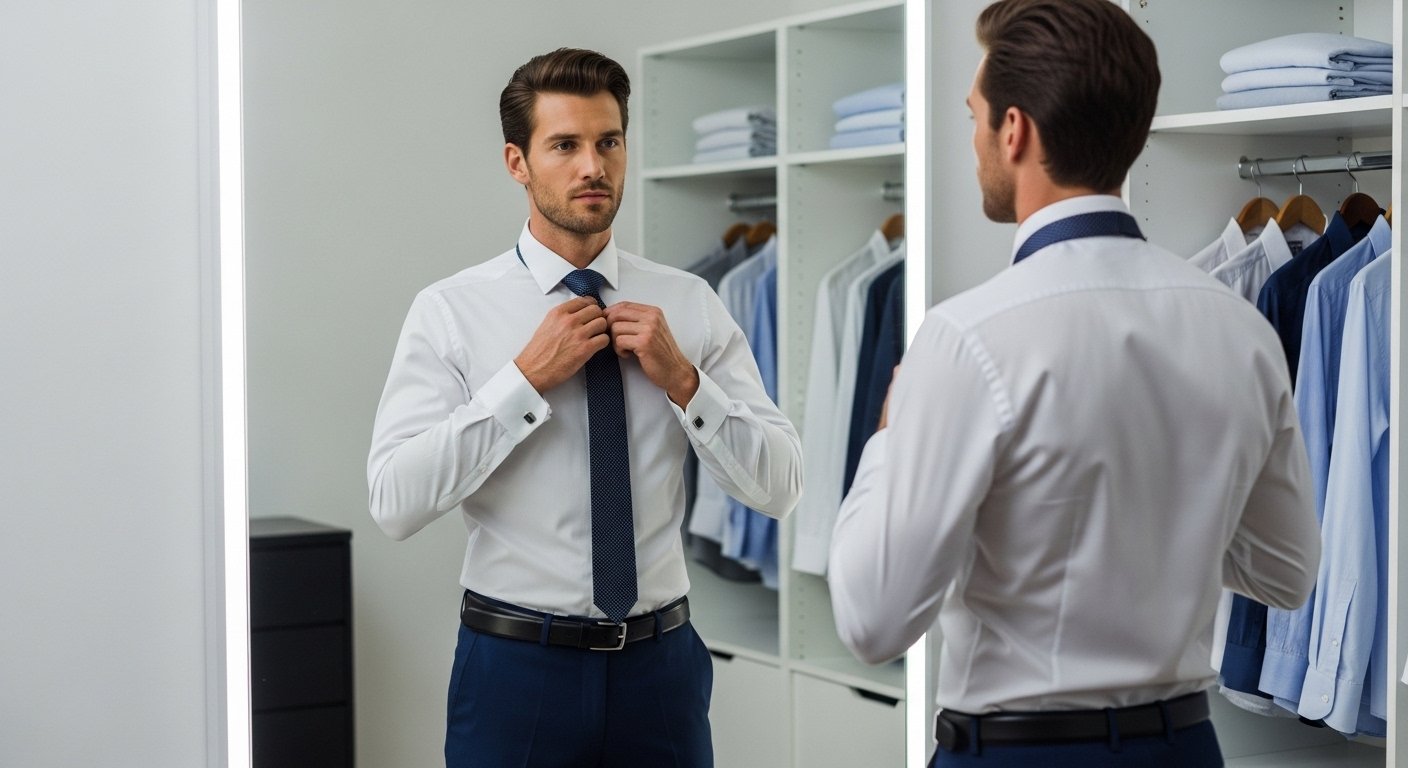
Dressing up may seem like an easy task until a shirt and a tie come into the scene. Sometimes, that little putting together will provide the atmosphere of how well-polished, carefree, or considerate an outfit is. Rules tend to be mentioned, but style tends to be more instinctive, developing based on comfort and awareness. Shirts and ties speak quietly in terms of color, pattern, and texture, and sometimes say more than is anticipated. This guide considers matching them in a non-serious manner, which creates a chance of personal preference and real-life circumstances. It is not about perfection but the confidence that has been achieved with ease. When the mixes are comfortable and purposeful, the preparation process may be less stressful and even a little more fun, even on a normal day.
Understanding color balance

Color balance usually starts with the observation of the intensity or the lightness of each work. A lighter shirt could be more comfortable with a lighter tie, and darker colors in combination could produce a more solid and grounded look that could fit most environments.
Pairing dark shirts with subtle ties
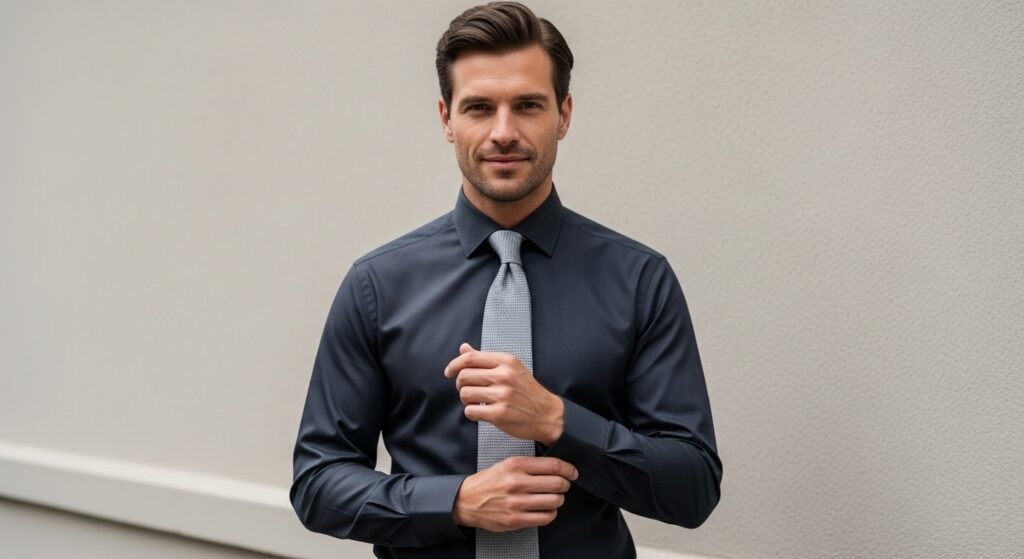
A darker tie is usually worn with a light shirt, which can be contrasting and very natural. This combination can assist the tie to become a point of focus and have the shirt quietly underpin the tie without trying to cause any rivalry.
Playing with patterns carefully
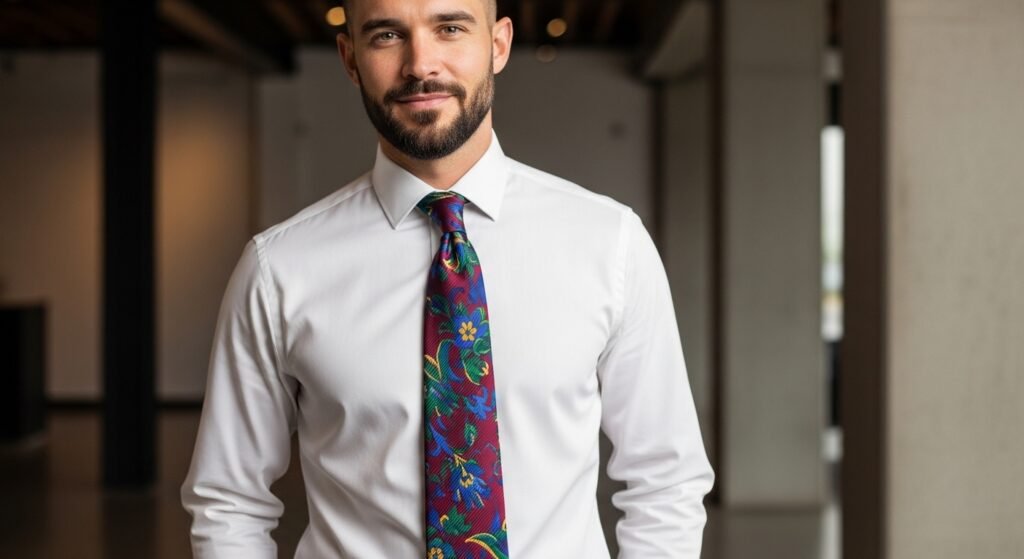
Patterns can complement each other when one is calm compared to the other. A plain shirt and a patterned tie can be considered more comfortable, whereas two patterns can be used, though one of them can be smaller or less prominent.
Considering fabric texture
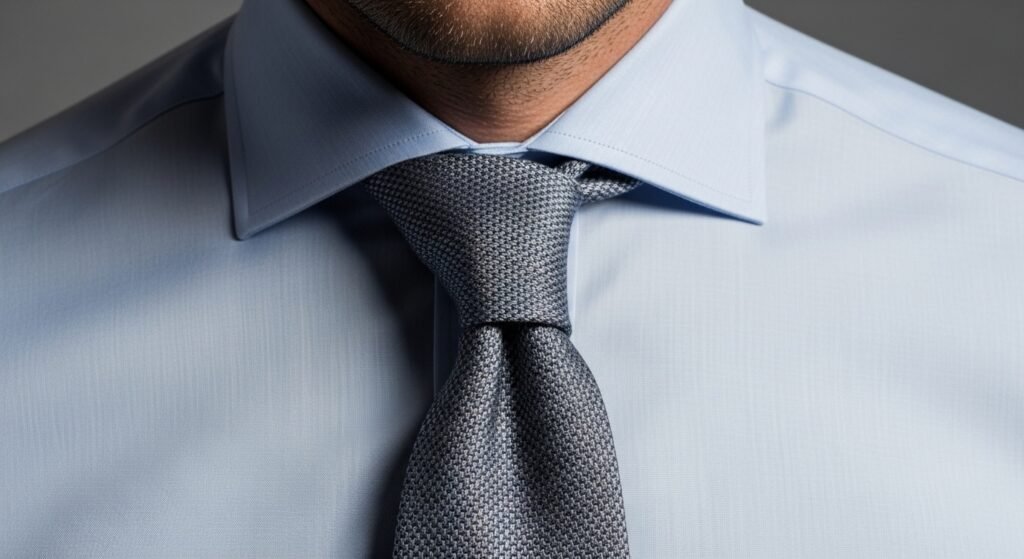
At times, texture can be even more important than color. A shirt that is smooth with a slightly textured tie may provide layers, whereas the presence of similar textures may make the person feel uncomfortable, depending on their setting and comfort.
Seasonal color awareness

The natural changes of the seasons can affect the selection of colors. Light colors may be more appropriate in hotter seasons, and darker ones may be cozy in colder seasons; of course, it is always up to an individual.
Formal and relaxed settings
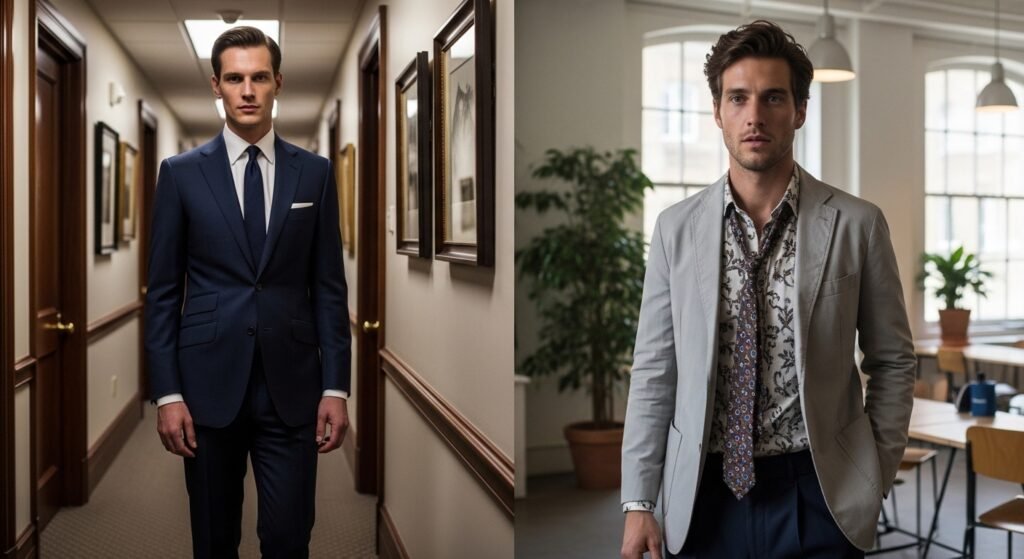
The environment tends to influence the association. Formal areas can tend toward more austere pairings, whereas casual areas can also permit bolder colors or patterns and be able to express individuality without feeling out of place.
Letting the shirt lead

In other cases, the shirt is the direction. Tie could just make a shirt, which is already expressive. This can assist in avoiding the overworking and overcoordination of the outfit.
Letting the tie stand out
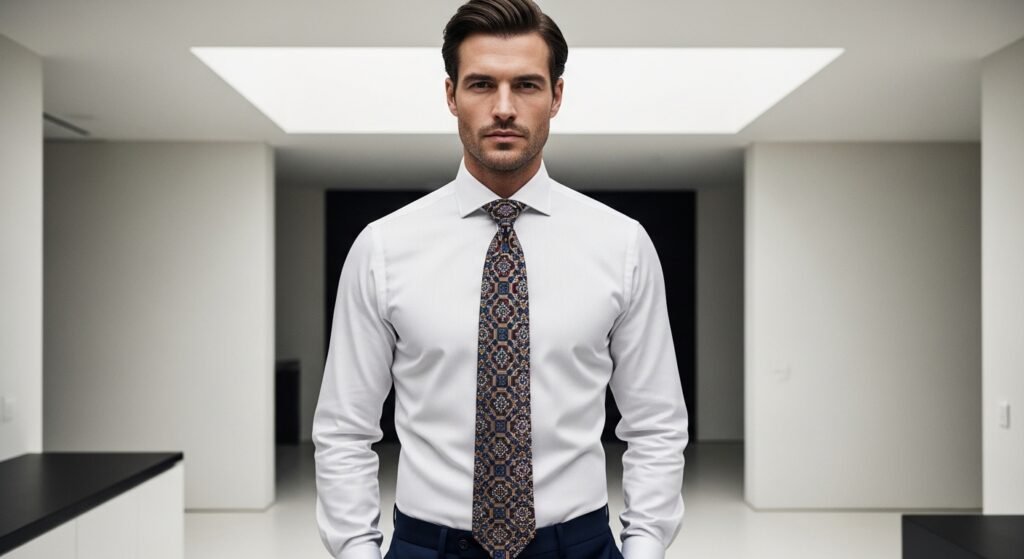
Sometimes the visual interest might be attached to a tie. The most basic shirt can provide room to allow a unique tie, which can provide a personality to the otherwise balanced and calm outfit.
Paying attention to proportions
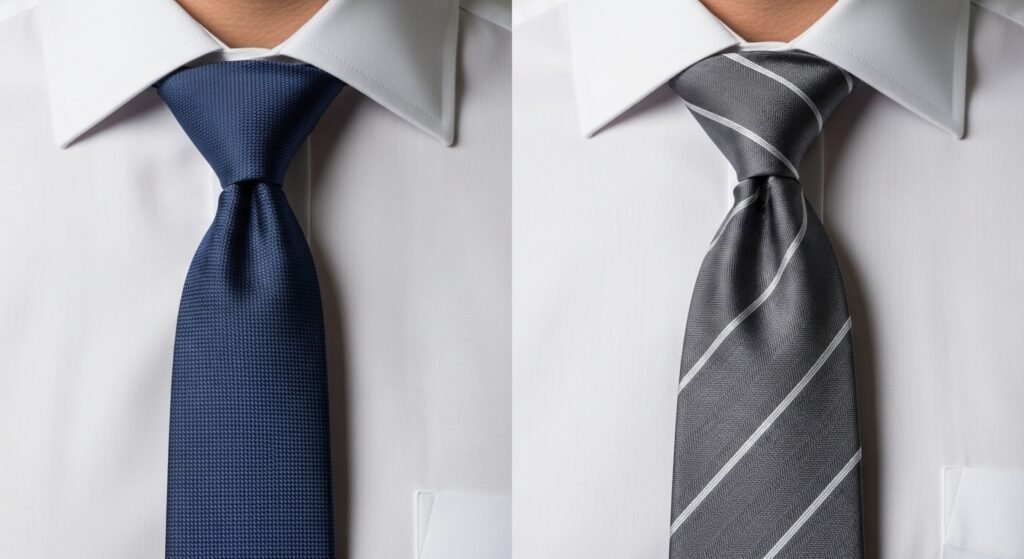
Proportion may have a role to play in the interaction of patterns. Patterns of wider ties can be more comfortable with patterns of larger shirts, and narrower patterns can be more appropriate with finer details, although trial and error tend to determine what fits.
Trusting personal comfort

Good style tends to take comfort as a guide. In case a matching is comfortable and easily wearable, it might come off that way. Even the simplest combinations can be perceived differently by others because of confidence.
About the Author